The current state of commercial mediation in Vietnam: Opportunities and challenges.
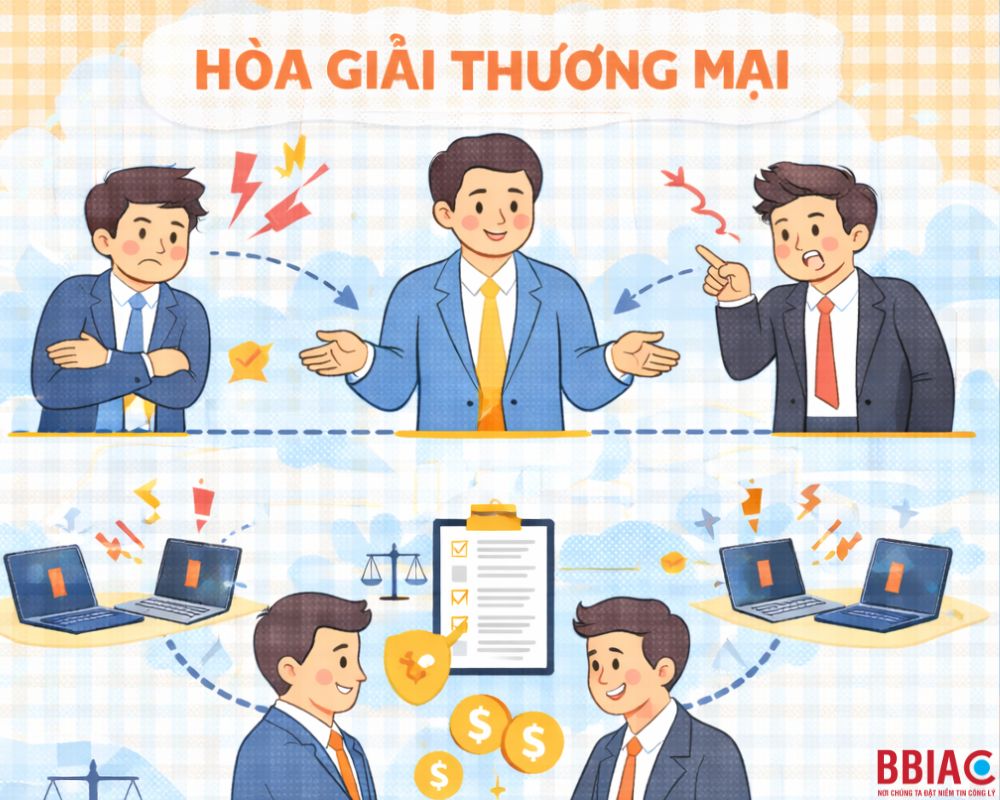
Commercial mediation is an out-of-court dispute resolution method where the parties involved negotiate with the support of a neutral third party to reach a voluntary agreement that is beneficial to all. This method not only saves time and costs but also maintains long-term business relationships between the disputing parties. In the context of Vietnam’s increasingly integrated economy, commercial mediation is gaining attention as an effective tool for handling complex commercial disputes. According to research, commercial mediation is not only an alternative to court proceedings but also an important part of an alternative dispute resolution system, helping to reduce the burden on the traditional judicial system.
The history of commercial mediation in Vietnam dates back to the early years of economic reform, when the country opened up and participated in international trade agreements. Before 2017, commercial mediation was mainly carried out through scattered regulations in the 2005 Commercial Law and its guiding documents. However, a major turning point occurred with the promulgation of Decree 22/2017/ND-CP on commercial mediation, marking the official recognition by the state of this method. This decree internalized Vietnam’s international commitments within the framework of the World Trade Organization (WTO) and free trade agreements (FTAs) such as the CPTPP and EVFTA. Since then, commercial mediation has gradually become an indispensable part of Vietnam’s commercial legal system, with the formation of numerous professional mediation centers.
This article aims to provide an in-depth analysis of the current state of commercial mediation in Vietnam, clarifying both development opportunities and existing challenges. Through this analysis, the article proposes specific solutions to promote commercial mediation as a more common dispute resolution method, contributing to the sustainable development of the economy. The article is based on reputable sources, statistics from organizations such as the Vietnam Commercial Mediation Center (VMC) and the Vietnam International Arbitration Center (VIAC), as well as recent academic research. In the context of an increasingly digital and globalized economy, understanding the current state of commercial mediation is crucial not only for businesses but also for policymakers in improving the legal framework.
- Concept and characteristics of commercial mediation
To understand the current situation, it is necessary to clarify the concept of commercial mediation. Commercial mediation is a process in which disputing parties, with the assistance of a mediator, discuss and agree to resolve their conflict without a binding court ruling. Unlike arbitration – where the ruling has the same legal effect as a judgment – commercial mediation emphasizes voluntariness and compromise. The mediator plays a neutral role, not making decisions but only assisting the parties in finding a common solution.
Key features of commercial mediation include high confidentiality, helping parties avoid disclosing sensitive business information; flexibility in the process, allowing parties to decide the time and location themselves; and lower costs compared to litigation or arbitration. According to a 2015 study by the IFC (International Finance Corporation) in collaboration with VIAC, commercial mediation can save 50-70% of costs compared to traditional court proceedings. In Vietnam, commercial mediation is commonly applied in areas such as sales contracts, investment disputes, and commercial labor disputes.
Compared to other countries, commercial mediation in Vietnam is still in its infancy. In Singapore or Hong Kong, commercial mediation is deeply integrated into the legal system, with success rates reaching up to 80%. Vietnam, with its developing economy, has great potential but needs to improve to reach a comparable level. These characteristics form the basis for analyzing the current situation, where commercial mediation faces both opportunities and challenges.
- Trade mediation in the context of the Vietnamese economy
With Vietnam’s economy growing at an average of 6-7% annually, the number of commercial disputes is increasing exponentially. According to a World Bank report, Vietnam ranks 69th out of 190 countries in the Contract Dispute Resolution Index, highlighting the need for improved mechanisms such as commercial mediation. Commercial mediation not only reduces the burden on the courts – where processing times can extend to 2-3 years – but also fosters a more business-friendly environment, attracting foreign investment.
In Ho Chi Minh City, home to over 50% of the country’s businesses, commercial mediation plays a crucial role in resolving disputes related to real estate, banking and finance, and e-commerce. For example, during the COVID-19 pandemic, many contract disputes caused by unforeseen circumstances were resolved through mediation, helping businesses recover quickly. This importance is further emphasized in the context of Vietnam’s participation in new-generation FTAs, which demand transparent and effective dispute resolution mechanisms.
2.1 Legal framework for commercial mediation in Vietnam
The legal framework is the foundation for the development of commercial mediation. Decree 22/2017/ND-CP is the core document, regulating the organization, operation, and standards of mediators. This decree requires mediators to have at least 5 years of experience in the relevant field, and mediation agreements are legally binding like civil contracts. However, the decree does not clearly stipulate the enforcement of agreements if one party fails to comply, leading to some limitations in practice.
Other relevant legal documents include the 2005 Commercial Law (amended 2017), the 2020 Investment Law, and the 2015 Civil Code, all of which recognize commercial mediation as a legitimate method. For example, Article 317 of the Civil Code stipulates that parties have the right to choose mediation to resolve disputes. Furthermore, Vietnam has acceded to the Singapore Convention on Mediation (2018), but has not fully ratified it, making the implementation of international agreements difficult.
Compared to international standards, Vietnam’s legal framework lacks consistency. The Singapore Convention allows for the enforcement of settlement agreements as arbitration awards, but in Vietnam, such agreements only have contractual effect and are easily disputed in court. Countries like China and India have integrated this Convention, leading to the stronger development of commercial mediation. In Vietnam, perfecting the legal framework is necessary to take advantage of integration opportunities.
2.2 Mediation Centers and Practical Activities
Practical experience shows that commercial mediation is often combined with arbitration, forming a “med-arb” model (mediation first, arbitration later if unsuccessful). For example, at VIAC, the success rate of mediation in commercial disputes reaches approximately 30-40%, higher than the national average. However, many centers exist only in name, lacking substantive activity due to limited resources.
In Ho Chi Minh City, commercial mediation activities are more vibrant thanks to the dynamic business environment. Local centers such as the Ho Chi Minh City Commercial Mediation Center have handled dozens of cases related to construction contracts and international trade. This practice reflects potential, but also reveals challenges in terms of scale and quality.
2.3 Statistics and specific examples of commercial mediation
Statistics from the Ministry of Justice show that from 2017 to 2025, the number of mediation cases increased by an average of 15% annually, but still only accounted for about 1-2% of total commercial disputes. A 2015 survey by VIAC and IFC indicated that 70% of businesses were unaware of commercial mediation, leading to a low utilization rate. By 2025, with 176 economies accepting voluntary commercial mediation, Vietnam is striving to catch up.
For example: In a contract dispute between two businesses in Ho Chi Minh City in 2022, concerning delivery delays due to the pandemic, commercial mediation at VMC helped the parties reach a compensation agreement without going to court, saving months of time. Another example is a foreign investment dispute at VIAC, where successful mediation maintained a long-term partnership. These examples illustrate the effectiveness of commercial mediation, but also show the need for scaling it up.
2.4 Opportunities for development from international integration
International integration presents a significant opportunity for commercial mediation. With its participation in the CPTPP and EVFTA, Vietnam is committed to promoting ADRs (Adversarial Dispute Resolution), including commercial mediation, to create a transparent business environment. These agreements require mechanisms for rapid dispute resolution, making commercial mediation a preferred option for disputes with foreign elements.
Opportunities arising from integration also include learning from international experience. For example, Singapore’s mediation model has a high success rate thanks to its strong legal framework, which can be applied in Vietnam. In addition, support programs from international organizations such as the IFC and ADB are funding mediator training, opening up opportunities to enhance capacity.
In the context of the digital economy, online commercial mediation is a new trend that helps resolve e-commerce disputes quickly. Vietnam can leverage technology to develop commercial mediation, especially in areas like Ho Chi Minh City with its developed IT system.
- Economic and social benefits of commercial mediation
The economic benefits of commercial mediation include reduced dispute resolution costs, estimated at 50-70% savings compared to litigation. For small and medium-sized enterprises (which account for 97% of all), commercial mediation helps maintain business operations without long-term disruption. Society benefits from reduced burden on the courts, allowing the judiciary to focus on more serious cases.
From a social perspective, commercial mediation promotes a culture of compromise, reduces conflict, and builds trust within the business community. In the post-COVID-19 context, commercial mediation has proven its role in resolving disputes involving unforeseen circumstances, contributing to social stability. These benefits form the foundation for the sustainable development of commercial mediation.
3.1 Initiatives and projects supporting development
Initiatives such as the workshop “Commercial Mediation in Vietnam: Current Situation and Future Prospects” organized by the Supreme People’s Court in 2022 have opened up many opportunities for discussion and cooperation. The VIAC and IFC project focuses on surveys and training, helping to raise awareness among businesses.
In addition, international cooperation projects such as the European Union (EU) program support the improvement of ADR legislation in Vietnam. Locally, Ho Chi Minh City has initiatives such as establishing a network of specialized mediators and supporting local businesses in accessing free or low-cost commercial mediation.
- Legal and regulatory challenges
The biggest challenge is the incomplete legal framework. Decree 22/2017/ND-CP lacks specific regulations on the enforcement of agreements, leading to a situation where one party may not comply without facing strong sanctions. Compared to the Singapore Convention, Vietnam has not fully ratified it, making the enforcement of international mediation agreements difficult.
Furthermore, the lack of consistency between legal texts such as the Commercial Law and the Civil Code causes confusion for mediators and parties involved. Academic studies indicate that amendments are needed to integrate commercial mediation more closely into the judicial system.
4.1 Lack of resources and training for mediators
Lack of resources is a major obstacle. Many centers lack professional mediators, with only about 200 certified mediators nationwide. Training is not systematic, mainly relying on short courses, leading to low mediation quality.
In localities outside Hanoi and Ho Chi Minh City, resources are even more limited, making commercial mediation less widespread. This challenge requires investment from both the state and private sectors to build a professional workforce.
4.2 Social and cultural perceptions of conflict
Low awareness among businesses and the community is a major challenge. Surveys show that 70% of businesses prefer the courts due to familiarity with the traditional system. The “win-lose” culture in disputes in Vietnam makes parties reluctant to compromise, unlike the mediation culture in Western countries.
Furthermore, a lack of public awareness campaigns has led to doubts about the fairness of commercial mediation. This challenge needs to be addressed through education and awareness campaigns.
5Solutions for improving the legal framework.
To overcome the challenges, Decree 22/2017/ND-CP needs to be improved by adding provisions on the implementation of agreements, similar to the Singapore Convention. The government should fully ratify this Convention to increase its internationalization.
Furthermore, integrating commercial mediation into the amended Commercial Law, clearly defining online mediation and disputes involving foreign elements, will create a solid legal foundation.
5.1Training and capacity building for mediators
Investing in training is key. Establish national training programs and collaborate with international organizations like the ICC to enhance the skills of mediators. Encourage universities such as the Ho Chi Minh City University of Law to open majors in ADR (Adversarial Dispute Resolution).
Establish a network of specialized mediators, particularly in the fields of finance and e-commerce, to meet diverse needs.
5.2 International communication and cooperation
Disseminate information through workshops and media campaigns to raise awareness. For example, collaborate with the Vietnam Business Association to organize free workshops on commercial mediation.
International cooperation with centers such as SIAC (Singapore) to exchange experiences. These solutions will help make commercial mediation a more common method.
Conclude
Commercial mediation in Vietnam is undergoing a transformation, presenting both positive and challenging aspects. Opportunities from international integration and clear economic benefits exist, but legal, resource, and awareness challenges need urgent attention. With proposed solutions, commercial mediation can become a cornerstone of the dispute resolution system, contributing to sustainable economic development. The future of commercial mediation depends on the concerted efforts of the government, businesses, and the community.

